Showing posts with label Study. Show all posts

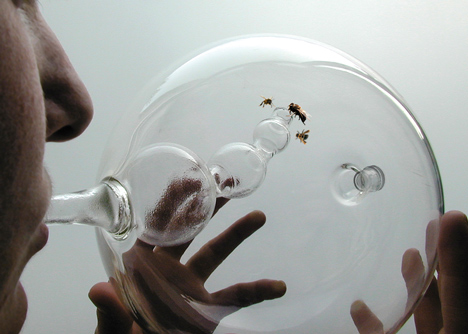
Portuguese designer Susana Soares has developed a device for detecting cancer and other serious diseases using trained bees
Dezeen_Susana_Soares_Bees_Design_2
The bees are placed in a glass chamber into which the patient exhales; the bees fly into a smaller secondary chamber if they detect cancer.
"Trained bees only rush into the smaller chamber if they can detect the odour on the patient's breath that they have been trained to target," explained Soares, who presented her Bee's project at Dutch Design Week in Eindhoven last month.
Dezeen_Susana_Soares_Bees_Design_1SQ
Scientists have found that honey bees - Apis mellifera - have an extraordinary sense of smell that is more acute than that of a sniffer dog and can detect airborne molecules in the parts-per-trillion range.
Bees can be trained to detect specific chemical odours, including the biomarkers associated with diseases such as tuberculosis, lung, skin and pancreatic cancer.
Bees have also been trained to detect explosives and a company called Insectinel is training "sniffer bees" to work in counter-terrorist operations.
Dezeen_Susana_Soares_Bees_Design_3
"The bees can be trained within 10 minutes," explains Soares. "Training simply consists of exposing the bees to a specific odour and then feeding them with a solution of water and sugar, therefore they associate that odour with a food reward."
Once trained, the bees will remember the odour for their entire lives, provided they are always rewarded with sugar. Bees live for six weeks on average.
"There's plenty of interest in the project especially from charities and further applications as a cost effective early detection of illness, specifically in developing countries," Soares said.
Dezeen_Susana_Soares_Bees_Design_4
Here is a project description by Susana Soares:


Bee's / Project
Bee's explores how we might co-habit with natural biological systems and use their potential to increase our perceptive abilities.
The objects facilitate bees' odour detection abilities in human breath. Bees can be trained within 10 minutes using Pavlov’s reflex to target a wide range of natural and man-made chemicals and odours, including the biomarkers associated with certain diseases.
The aim of the project is to develop upon current technological research by using design to translate the outcome into systems and objects that people can understand and use, engendering significant adjustments in their lives and mind set.
How it works
The glass objects have two enclosures: a smaller chamber that serves as the diagnosis space and a bigger chamber where previously trained bees are kept for the short period of time necessary for them to detect general health. People exhale into the smaller chamber and the bees rush into it if they detect on the breath the odour that they where trained to target.
What can bees detect?
Scientific research demonstrated that bees can diagnose accurately at an early stage a vast variety of diseases, such as: tuberculosis, lung and skin cancer, and diabetes.
Precise object
The outer curved tube helps bees avoid from flying accidentally into the interior diagnosis chamber, making for a more precise result. The tubes connected to the small chamber create condensation, so that exhalation is visible.
Detecting chemicals in the axilla
Apocrine glands are known to contain pheromones that retain information about a person's health that bees antennae can identify.
The bee clinic
These diagnostic tools would be part of system that uses bees as a biosensor.
The systems implies:
- A bee centre: a structure that facilitates the technologic potential of bees. Within the centre is a beefarm, a training centre, a research lab and a healthcae centre.
- Training centre: courses can be taken on beetraining where bees are collected and trained by beetrainers. These are specialists that learn beetraining techniques to be used in a large scope of applications, including diagnosing diseases.
- BEE clinic: bees are used at the clinic for screening tests. These insects are very accurate in early medical diagnosis through detection on a person's breath. Bees are a sustainable and valuable resource. After performing the diagnose in the clinic they are released, returning to their beehive.
Bee training
Bees can be easily trained using Pavlov’s reflex to target a wide range of natural and man-made chemicals odours including the biomarkers associated with certain diseases. The training consists in baffling the bees with a specific odour and feeding them with a solution of water and sugar, therefore they associate that odour with a food reward.

By MUHAMMAD IQBAL
To study the effect of weed management practices on weed control in wheat, an experiment was conducted at two locations Such as Agricultural Research Farm, NWFP Agricultural University, Peshawar and Agricultural research Farm, Faculty of Agriculture, Gomal University, D.I.Khan for the year 1998-1999 and 1999-2000. The experiment was laid out in split-split plot Design with three replications. The factors included in the experiment were varieties (Bakhtawar-92, Ghaznavi-98, and Inqilab-91) being assigned to main plots, while herbicides such as broad-spectrum herbicide, (2.4-D 72EC + Isoproturon 75 WP @ 623 and 649 g a.i. ha-1, respectively), broad Leaf herbicide, (2,4-0 72 EC @ 711 g a.i. ha-1), grasses weeds herbicide, (Isoproturon 75 WP @ 968 g a.i. ha1), and weedy check (no herbicide) were kept in sub-plots.
Effect of weed management practices and spacing on weed control: agrinfobank.comThe row spacing (18, 25, and 32 cm) were allotted to sub-sub -plots. The experiment was planted on 31 October and 15 November in both years at Peshawar and D.I.Khan, respectively. Data were recorded on weed density and some agronomic, morphological and physiological traits of wheat and net profit and cost benefit ratio were calculated. The data for the individual trait were subjected to analysis of variance (ANOVA) and the means were separated by LSD. Variety Bakhtawar-92 was more productive and profitable than Ghaznavi-98 or Inqilab-91. It produced higher number of tillers m-2 (6% and 13%), grain yield (5% and 10%) and net profit (8% and 17%) than Ghaznavi-98 and Inqilab-91, respectively. The plots sown to Inqilab-91 variety, which is tallest and has vigorous early growth, had lesser number of grasses and broad leaf weeds than other verities. In Inqilab-9 I grasses weeds were reduced to 11% and 5%, and broad leaf weeds by 8 and 10% as compared to Bakhtawar-92 and Ghaznavi-98, respectively. The application of broad-spectrum herbicide consistently controlled both grasses and broad leaf weeds in all varieties at all row spacing in both locations and years. The increase in number of tillers m-2 (17%), number of productive tillers m-2 (18%), spikelets spike-1 (5%), 1000-grain weight (4%), biological yield (19%), grain yield (21%), straw yield (18%), harvest index (11%), and net profit (32%) over weedy check was due to application of broad spectrum herbicide, which controlled both grasses and broad leaf weeds. The interaction effect of broad- spectrum herbicides with variety Bakhtawar-92 produced significantly higher grain yield (24%) and net profit (34%), respectively. The interaction of broad spectrum with 18 cm row spacing was also significant in controlling both grasses and broad leaf weeds. The reduction in grasses and broad leaf weeds over the weedy check was 85 and 81%, respectively. The effect of 18 cm row spacing on reduction of both grasses and broad leaf weeds was significant, which ultimately increased number of tillers m-2 (9%), grain yield (10%) and net profit (23%), respectively over the weedy check. The 18 cm row spacing x Bakhtawar-92 interaction significantly increased grain yield (3% and 11 %) and net profit (8% and 23%) over 25 and 32 cm row spacing. In the light of the findings, it is suggested that for the integrated weed management in wheat, the broad-spectrum herbicide may be integrated with planting of aggressive varieties of wheat.
Source: This is Abstract of thesis entitle “EFFECT OF WEED MANAGEMENT PRACTICES AND SPACING ON WEED CONTROL IN DIFFERENT WHEAT CULTIVARS IN N.W.F.P PAKISTAN” by MUHAMMAD IQBAL Affiliated with GOMAL UNIVERSITY D. I. KHAN / AGRONOMY, Published in 2002 under Agriculture Chemistry.

A new study out Thursday comparing DNA from modern canines to ancient fossils suggests that today's pets descended from now-extinct populations of wolves in Europe.
Man's earliest best friends likely scavenged bones from scrap piles left behind by hunter-gatherers, said the report by international researchers in the journal Science.
The bolder the wolf, the more he would be able to eat and the more loyal to humans he would become.
Scientists now believe this process of domestication likely began as many as 19,000 to 32,000 years ago.
"All modern dogs have a very close relationship to ancient dogs or wolves from Europe," lead author Olaf Thalmann, a researcher at the University of Turku in Finland, told AFP.Modern dogs descended from European wolves: study: agrinfobank.com
The team analyzed the mitochondrial DNA of 18 prehistoric canines -- eight dogs and 10 wolves -- and compared them to 77 mitochondrial genomes, showcasing traits inherited from the mother, from dogs from all over the world.
The ancient samples came from Russia, Ukraine, Central Europe, the United States and Argentina, Thalmann said. Some were more than 30,000 years old.
The modern DNA from dogs and wolves spanned the globe, from Israel to China, Sweden to Mexico.
"The oldest domesticated dog material came from Europe," said co-author Robert Wayne, a professor in the department of ecology and evolutionary biology at the University of California Los Angeles.
"It was an inescapable conclusion."
However, other researchers say the matter of who tamed dogs first and where it happened is far from settled.
A separate team of researchers published a study in Science in 2002, saying that modern dogs came from southern China.
"Our data points to origins in China and I am still pretty sure that is the place," said Peter Savolainen, an associate professor at the Royal Institute of Technology in Sweden.
Savolainen said the study by Thalmann and colleagues lacks samples from important parts of the world -- namely the Middle East and China.
"If you are looking for the origins of dogs and you only have samples from Europe, then of course it must be Europe," he told AFP.
Savolainen said that much like the "Out of Africa" theory that says humans originated in Africa and migrated elsewhere, dog history follows an "Out of south China" scheme.
"You see several branches that are unique among dogs in south China and you don't see them anywhere else," he said.
Asked about the criticism from China theorists, Thalmann countered that his team used more complete DNA sequencing and older samples that show Europe was indeed the place where it all began.
Still, the matter is far from settled, Thalmann told AFP. More research in the years to come may reveal more on the topic, perhaps through the discovery of more fossils, or a more complete look at the genetic data.
In the meantime, most experts agree that early dogs became a part of human life long before the development of agriculture and farming societies.
Little is known about the people who domesticated them, or how they did it.
But Savolainen believes that wolves took the lead when it came to befriending humans, at least initially.
"They approached human camps and ate from the scrap heaps and those who dared come closer would get most of the food and they would have an evolutionary advantage," he told AFP.
"So with each generation they would sort of tame themselves to get accustomed to humans. That is everybody's favorite theory, and I think it is a nice theory as well."
As some wolves relied less on killing prey and more on eating scraps, their snouts gradually grew shorter. They likely followed human groups whenever they picked up and moved camps.
Then, about 10,000 to 15,000 years ago, the closer friendship truly began.
"At some point, people and wolves really started interacting and humans took over the rest of the domestication process," said Savolainen.
Thalmann said his team's evidence suggests dogs likely accompanied European explorers to the New World. (AFP)


In the chemical age of agriculture that began in the 1960s, potassium chloride (KCl), the common salt often referred to as potash, is widely used as a major fertilizer in the Corn Belt without regard to the huge soil reserves that were once recognized for their fundamental importance to soil fertility. Three University of Illinois soil scientists have serious concerns with the current approach to potassium management that has been in place for the past five decades because their research has revealed that soil K testing is of no value for predicting soil K availability and that KCl fertilization seldom pays.
U of I researchers Saeed Khan, Richard Mulvaney, and Timothy Ellsworth are the authors of “The potassium paradox: Implications for soil fertility, crop production and human health,” which was posted on October 10th by Renewable Agriculture and Food Systems.Soil Testing For Potassium And The Fertilizer Value Of Potassium Chloride Challenged By New Study
A major finding came from a field study that involved four years of biweekly sampling for K testing with or without air-drying. Test values fluctuated drastically, did not differentiate soil K buildup from depletion, and increased even in the complete absence of K fertilization.
Explaining this increase, Khan pointed out that for a 200-bushel corn crop, “about 46 pounds of potassium is removed in the grain, whereas the residues return 180 pounds of potassium to the soil—three times more than the next corn crop needs and all readily available.”
Khan emphasized the overwhelming abundance of soil K, noting that soil test levels have increased over time where corn has been grown continuously since the Morrow Plots were established in 1876 at the University of Illinois. As he explained, “In 1955 the K test was 216 pounds per acre for the check plot where no potassium has ever been added. In 2005, it was 360.” Mulvaney noted that a similar trend has been seen throughout the world in numerous studies with soils under grain production.
Recognizing the inherent K-supplying power of Corn Belt soils and the critical role of crop residues in recycling K, the researchers wondered why producers have been led to believe that intensive use of KCl is a prerequisite for maximizing grain yield and quality. To better understand the economic value of this fertilizer, they undertook an extensive survey of more than 2,100 yield response trials, 774 of which were under grain production in North America. The results confirmed their suspicions because KCl was 93 percent ineffective for increasing grain yield. Instead of yield gain, the researchers found more instances of significant yield reduction.
The irony, according to Mulvaney, is that before 1960 there was very little usage of KCl fertilizer. He explained, “A hundred years ago, U of I researcher Cyril Hopkins saw little need for Illinois farmers to fertilize their fields with potassium,” Mulvaney said. “Hopkins promoted the Illinois System of Permanent Fertility, which relied on legume rotations, rock phosphate, and limestone. There was no potash in that system. He realized that Midwest soils are well supplied with K. And it’s still true of the more productive soils around the globe. Potassium is one of the most abundant elements in the earth’s crust and is more readily available than nitrogen, phosphorus, or sulfur. Farmers have been taught to think that fertilizers are the source of soil fertility—that the soil is basically an inert rooting medium that supports the plant.”
Khan and his colleagues pointed out that KCl fertilization has long been promoted as a prerequisite for high nutritional value for food and feed. To their surprise, they found that the qualitative effects were predominantly detrimental, based on a survey of more than 1,400 field trials reported in the scientific literature. As Khan explained, “Potassium depresses calcium and magnesium, which are beneficial minerals for any living system. This can lead to grass tetany or milk fever in livestock, but the problems don’t stop there.
Low-calcium diets can also trigger human diseases such as osteoporosis, rickets, and colon cancer. Another major health concern arises from the chloride in KCl, which mobilizes cadmium in the soil and promotes accumulation of this heavy metal in potato and cereal grain. This contaminates many common foods we eat—bread, potatoes, potato chips, French fries—and some we drink, such as beer. I’m reminded of a recent clinical study that links cadmium intake to an increased risk of breast cancer.”
While working in the northwestern part of Pakistan three decades ago, Khan was surprised to discover another use for KCl fertilizer. “I saw an elderly man making a mud wall from clay,” Khan said. “He was using the same bag of KCl that I was giving to farmers, but he was mixing it with the clay. I asked why he was using this fertilizer, and he explained that by adding potassium chloride, the clay becomes really tough like cement. He was using it to strengthen the mud wall.”
“The man’s understanding was far ahead of mine,” continued Khan, “and helped me to finally realize that KCl changes the soil’s physical properties. Civil engineers know this, too, and use KCl as a stabilizer to construct mud roads and foundations.” Mulvaney mentioned that he had demonstrated the cementing effect of KCl in his soil fertility class, and that calcium from liming has the opposite effect of softening the soil. He cautioned against the buildup philosophy that has been widely advocated for decades, noting that agronomic productivity can be adversely affected by collapsing clay, which reduces the soil’s capacity to store nutrients and water and also restricts rooting.
Khan and Mulvaney see no value in soil testing for exchangeable K and instead recommend that producers periodically carry out their own strip trials to evaluate whether K fertilization is needed. Based on published research cited in their paper, they prefer the use of potassium sulfate, not KCl.
Source: University of Illinois College of Agricultural, Consumer and Environmental Sciences

The International Egg Commission has proclaimed the second Friday in October as World Egg Day. Countries throughout the world will be joining in the celebration of the egg. To what does the egg owe this honour? There are at least a dozen good reasons:

1) Eggs are one of the most versatile foods on the market. What other ingredient can cause a souffle to rise and a custard to thicken? What else can be scrambled, fried, poached, and baked - with equally delicious results? Eggs are just as handy when separated. Egg whites make delicate meringues and elegant angel food cakes, while egg yolks enrich sauces, cakes, and pie fillings. World egg day 20132) Eggs have a high nutrient density because, in proportion to their calorie count, they provide 12% of the Daily Value for protein and a wide variety of other nutrients such as vitamin A, B6, B12, folate, iron, phosphorus, and zinc. And, for as little as 75 calories - lots of nutrition for relatively few calories!
3) Speaking of protein, egg protein quality is so high that scientists often use eggs as the standard by which the protein quality of other foods is measured. All the important amino acids, the building blocks of body protein, are found in an egg in the right proportions for your body's needs.
4) Did you say "lean"? As for the fat found in eggs, two-thirds of it is the healthy unsaturated kind. And, now that we are hearing more about health risks from trans-fatty acids, it's reassuring to know that there are no trans-fats in eggs. The fat that the egg does supply helps nutrients such as vitamins A, D, E, and K to be used by the body.
5) Eggs have always been a bargain, nutritionally and economically. Studies have found that eggs are one of the best protein buys.
6) Any time of the day is right for eggs. You could start your morning with scrambled eggs stuffed into a pita pocket for a grab-and-run breakfast. A hard-cooked egg, sprinkled with your favorite herb or spice, makes a nutritious mid-morning snack. Lunch at home can be omelets - ready in minutes and easy to personalize. If you're brown-bagging it, don't forget egg salad. The addition of cooked pasta or rice makes it especially satisfying. It's easy to have dinner with eggs. Quiches, make-ahead stratas and top-of-the-range frittatas can all turn last night's leftovers into a gourmet delight.
7) Egg yolk is an excellent source of choline, a nutrient now considered essential for human health. Research has shown choline to be required for normal formation of brain tissue and memory and to play a role in preventing heart disease.
8) Lutein and zeaxanthin are two newly-recognized nutrients that have put eggs in the "functional foods" category. A functional food is one that provides health benefits beyond its basic nutrient content. Recent studies have shown that consuming lutein and zeaxanthin can significantly lower risk of age-related macular degeneration (AMD), a leading cause of blindness affecting people over the age of 65. In addition, there is a less likelihood of cataracts, the clouding of the eye covering which often accompanies aging.
9) On weekends, when time is not an issue, eggs can be elegant. A puffy omelet (in which beaten egg whites are folded into the yolks) makes a luxurious brunch or dessert. Hot or cold, sweet or savory, souffles are the ultimate pampering fare. And don't forget crepes. They can be stored in the freezer then thawed and filled for a quick, tasty treat. Cheesecake is a classic egg-enriched dessert with as many variations as there are cooks. Or include an informal Sunday supper with fresh fruit layered in a parfait glass and topped with a stirred custard sauce.
10) For those interested in weight loss, research indicates that increased protein and reduced carbohydrate intake stabilize blood sugar been meals, which can lead to reduced between-meal snacking.
11) Children like eggs, too. Growing bodies need nutrients, and eggs make a wise food choice. Egg protein is a great source of nutrition for growing children to build muscle. Deviled eggs are fun and easy for children to make... and eat. Or, scramble an egg in the microwave and place it in a hot dog bun - you've got an egg dog ready to be topped with "whatever". For an egg burger, top a hamburger patty with a fried egg and serve on a bun.
12) Convinced yet? Why not set aside the month of October to try out new egg ideas with your family? Crack open your imagination! You may be pleasantly surprised.

Beneficial nematodes seek out and kill over 200 species of pest insect in the soil and will have no detrimental affect on species such as ladybugs, earth worms and other helpful beneficial insects.
BIOLOGICAL Control Of Pest Insects With Nematodes. Beneficial Nematodes naturally occur in soil and are used to control soil pest insects and whenever larvae or grubs are present. Like all of our products, it will not expose humans or animals to any health or environmental risks. Beneficial nematodes only attack soil dwelling insects and leave plants and earthworms alone. The beneficial nematodes enters the larva via mouth, anus or respiratory openings and starts to feed. This causes specific bacteria to emerge from the intestinal tract of the nematode. These spread inside the insect and multiply very rapidly. The bacteria convert host tissue into products which can easily be taken up by the nematodes. The soil dwelling insect dies within a few days. Beneficial nematodes are a totally safe biological control in pest insects. The Beneficial nematodes are so safe the EPA has waived the registration requirements for application.NATURAL PEST CONTROL WITH BENEFICIAL NEMATODES
NATURE'S BEST WAY OF KILLING Grubs and Japanese Beetles.
Though they are harmless to humans, animals, plants, and healthy earthworms, beneficial nematodes aggressively pursue insects. The beneficial nematodes can be used to control a broad range of soil inhabiting insects and above ground insects in their soil inhabiting stage of life. More than 200 species of pest insects from 100 insect families are susceptible to these nematodes. When they sense the temperature and carbon dioxide emissions of soil-borne insects, beneficial nematodes move toward their prey and enter the pest through its body openings. The nematodes carry an associated bacterium (Xenorhabdus species) that kills insects fast within 48 hours. The bacteria is harmless to humans and other organisms and cannot live freely in nature. Several generations of nematodes may live and breed within the dead insect, feeding on it as a food source. When the food source is gone, they migrate into the soil in search of a new host. When the pest population is eliminated, the beneficial nematodes die off and biodegrade. Beneficial nematodes are so effective, they can work in the soil to kill the immature stages of garden pests before they become adults.
Beneficial nematodes infest grubs and other pest insects that are known to destroy lawns and plants.
The Nematodes are effective against grubs and the larval or grub stage of Japanese Beetles, Northern Masked Chafer, European Chafer, Rose Chafer, Fly larvae, Oriental Beetles, June Beetles, Flea beetles, Bill-bugs, Cut-worms, Army worms, Black Vine Weevils, Strawberry Root Weevils, Fungus Gnats, Sciarid larvae, Sod Web-worms, Girdler, Citrus Weevils, Maggots and other Dip-tera, Mole Crickets, Iris Borer, Root Maggot, Cabbage Root Maggot and Carrot Weevils.
Beneficial nematodes belong to one of two genera: Steinernema and Heterorhabditis are commercially available in the U.S. Steinernema is the most widely studied beneficial nematode because it is easy to produce. Heterorhabditis is more difficult to produce but can be more effective against certain insects, such as th white grubs, and Japanese beetles.
What are beneficial nematodes?
Nematodes are morphologically, genetically and ecologically diverse organisms occupying more varied habitats than any other animal group except arthropods. These naturally occurring organisms are microscopic, unsegmented round worms that live in the soil and, depending on the species, infect plants and animals. The two nematode families Steinernematidae and Heterorhabditidae, contain the insect parasitic nematode species. The most commonly used beneficial nematodes are Steinernema carpocapsae, S. feltiae, and H bacteriophora. Nematodes that are endoparasites of insects attack a wide variety of agricultural pests.
The life cycle of beneficial nematodes consists of eggs, four larval stages and the adults. The third larval stage is the infective form of the nematode (IT). They search out susceptible hosts, primarily insect larvae, by detecting excretory products, carbon dioxide and temperature changes. Juvenile nematodes enter the insect host through the mouth, anus or breathing holes (spiracles). Heterorhabditid nematodes can also pierce through the insect’s body wall. The juvenile form of the nematode carries Xenorhabdus sp. bacteria in their pharynx and intestine. Once the bacteria are introduced into the insect host, death of the host usually occurs in 24 to 48 hours.
As the bacteria enzymatically breaks down the internal structure of the insect, the Steinernematids develop into adult males and females which mate within the insect's body cavity. Heterorhabditids produce young through hermaphroditic females. This form of nematode has the sexual organs of both sexes. As the nematodes grow, they feed on the insect tissue that has been broken down by the bacteria. Once their development has reached the third juvenile stage, the nematodes exit the remains of the insect body.
Why are these organisms beneficial?
Parasitic nematodes are beneficial for six reasons. First, they have such a wide host range that they can be used successfully on numerous insect pests. The nematodes' nonspecific development, which does not rely on specific host nutrients, allows them to infect a large number of insect species.
Second, nematodes kill their insect hosts within 48 hours. As mentioned earlier, this is due to enzymes produced by the Xenorhabdus bacteria. Third, nematodes can be grown on artificial media. This allows for commercial production which makes them a more available product.
Fourth, the infective stage is durable. The nematodes can stay viable for weeks when stored at the proper temperature. Usually 3 weeks when refrigerated at 37o to 50o F. They can also tolerate being mixed with various insecticides, herbicides and fertilizers. Also, the infective juveniles can live for some time without nourishment as they search for a host.
Fifth, there is no evidence of natural or acquired resistance to the Xenorhabdus bacteria. Though there is no insect immunity to the bacteria, some insects, particularly beneficial insects, are possibly less parasitized because nematodes are less likely to encounter
How beneficial nematodes work: The life cycle of beneficial nematodes consists of six distinct stages: an egg stage, four juvenile stages and the adult stage. The adult spends its life inside the host insect. The third juvenile stage, called a dauer, enters the bodies of insects (usually the soil dwelling larval form. Some nematodes seek out their hosts, while others wait for the insect to come to them. Host seeking nematodes travel through the soil the thin film of water that coats soil particles. They search for insect larvae using built-in homing mechanisms that respond to changes in carbon dioxide levels and temperture. They also follow trails of insect excrement. After a single nematode finds and enters an insect through its skin or natural openings, the nematode release a toxic bacteria that kills its host, usually within a day or two. In less than two weeks the nematodes pass through several generations of adults, which literally fill the insect cadaver. Steinernema reproduction requires at least two dauer nematodes to enter an insect, but a single Heterorhabditis can generate offspring on its own.The nematodes actively searches for insect larvae. Once inside the larva the nematodes excretes specific bacteria from its digestive trac before it starts to feed. The bacteria multiply very rapid and convert the host tissue into products that the nematodes take up and use for food. The larva dies within a few days and the color changes from white-beige to orange-red or red-brown. The nematodes multiply and develop within the dead insect. As soon as the nematodes are in the infectious third stage, they leave the old host and start searching for new larvae. Infected grubs turn color from white-beige to red brown 2-4 days after application and becomes slimy. After a few weeks, dead larvae disintegrate completely and are difficult to find.
Beneficial nematodes are also very effective against termites, German cockroaches, flies, ant, and fleas.
Beneficial Nematodes attacking termite
APPLICATION:
Beneficial Nematodes are very easy to use. Mix with water and spray or sprinkle on the soil along garden plants or lawn. Put the contents of the Beneficial nematodes in a bucket of water and stir to break up any lumps, and let the entire solution soak for a few minutes. Application can be made using a water-can, irrigation system, knapsack or sprayer. On sprayer use a maximum pressure to avoid blockage, all sieves should be removed. The sprayer nozzle opening should be at leat 1/2 mm. Evenly spread the spraying solutions over the ground area to be treated. Continuous mixing should take place to prevent the nematodes from sinking to the bottom. After application keep the soil moist during the first two weeks for the nematodes to get establish. For a small garden the best method is using a simple sprinkling or water can to apply the Beneficial nematodes to the soil. Apply nematodes before setting out transplants; for othe pest insects, Japanese Beetles and grubs, apply whenever symptomatic damage from insects is detected. Best to apply water first if soil is dry.
Proper storage and handling is essential to nematode health.
Always follow the package instructions for the best method of mixing nematodes. Formulations vary depending on the species and target insect. Nematodes can be stored in the refrigerator up to a month (not the freezer) before they are mixed with water, but once the nematodes are diluted in water, they cannot be stored. Also, nematodes shouldn't be stored in hot vehicles, or left in spray tanks for long periods of time.
Nematodes need moisture in the soil for movement (if the soil is too dry or compact, they may not able to search out hosts) and high humidity if they are used against foliage pests. Watering the insect-infested area before and after applying nematodes keeps the soil moist and helps move them deeper into the soil. Care should be taken not to soak the area because nematodes in too much water cannot infect.
Apply nematodes in the early evening when soil temps are lower and UV incidence is lower as well (cloudy or rainy days are good too). Nematodes function best when pest insects are present in the soil.
Application is usually easy.
In most cases, there is no need for special application equipment. Most nematodes species are compatible with pressurized, mist, electrostatic, fan and aerial sprayers! Hose-end sprayers, pump sprayers, and watering cans are effective applicators as well. Nematodes are even applied through irrigation systems on some crops. Check the label of the nematode species to use the best application method. Repeat applications if the insect is in the soil for a longer period of time. There is no need for masks or specialized safety equipment. Insect parasitic nematodes are safe for plants and animals (worms, birds, pets, children). Because they leave no residues, application can be made anytime before a harvest and there is no re-entry time after application.
How to use beneficial nematodes: For the home gardener, localized spraying is probably the quickest and easiest way to get the nematodes into the soil. Producers ship beneficial nematodes in the form of dry powder type, and sponges. All of these dissolve in water and release the millions of nematodes. Each nematode ready to start searching for an insect in your lawn or garden. Nematodes should be sprayed on infested areas at the time when pests is in the soil. Timing is important, or else you will have to repeat the application. Northern gardeners should apply the nematodes in the spring, summer and fall, when the soil contains insect larvae. Most of the beneficial nematodes are adaptive to cold weather. In fact , the very best time to control white grubs is in the spring and fall. If your in a warmer climate, beneficial nematodes are most effective in the summer.
Fertilizers should be avoided roughly 2 weeks prior to and after nematode application, because they may be adversely affected by high nitrogen content.
Some pesticides work well with nematodes when their mutual exposure is limited while other pesticides may kill nematodes. Check labels or specific fact sheets to find out. Some chemicals to avoid are bendiocarb, chlorpyrifos, ethoprop, and isazophos. Fungicides to avoid are anilazine, dimethyl benzyl, ammonium chloride, fenarimol, and mercurous chloride. The herbicides, 2,4-D and trichlopyr and nematicide, fenamiphos, should be avoided as well.
During hot weather release nematodes in the evening when temperature is cooler. Release once or twice a year or until infestation subsides. Nematodes are shipped in the infectious larvae stage of their life cycle and can be stored in the refrigerator for up to 2 weeks. Always release very early in the morning or late in the late afternoon.
The value of beneficial nematodes is extremely high for anyone dealing with soil dwelling pest infestations. When considering where to buy nematodes, the Internet can be a great source of recommendations and contact information for distributors across the nation. Knowing what to expect when you receive your nematodes and how to apply them to your lawn and garden is part of being happy with the provider you choose.
Nematodes are microscopic, like moist soil, and are the best predators of pests that spend any stage of their life cycle in the soil. Fleas, cut worms, ants, root weevils and grubs are just a few of more than 250 difficult to control pests that nematodes move through the ground consuming without harming the environment.
There are a couple of determining factors when considering where to buy beneficial nematodes. It is best to order biological control nematodes and have them delivered directly to you from a reliable source. This helps insure that the nematodes you are buying are still alive. Nematodes do not live very long in storage. Therefore, buying nematodes that are stocked on a store shelf is very risky.
Step 1
Purchase beneficial nematodes from a reputable dealer. If your garden center does not carry nematodes, order them from a source online. As living organisms, they must be handled properly to remain effective. The species of nematodes used for lawn infestations are microscopic. You will see the carrier when you open the package, not the tiny nematodes. Beneficial nematodes are non-toxic to humans and pets.
Step 2
Apply the nematodes as soon as possible after you receive them. Store them in the refrigerator if you cannot apply them immediately.
Step 3
Apply nematodes in the evening for best results. Nematodes can die from exposure to sunlight or from drying out in the heat. Mix them with water in your sprayer and apply them by simply spraying your lawn. Follow specific instructions that came with the nematodes.



Earthworms are a welcomed sight in many gardens and yards since they can improve soil structure and mixing. But they are hard to find in the drier soils of eastern Colorado where water and organic matter is limited. Adding earthworms to fields where they are not currently found could help enhance the health and productivity of the soil. In areas where droughts are common, though, can earthworms survive? A new study suggests that they can.

Earthworms use water for many things - for respiration, to keep their bodies from drying out, and to make the mucus that helps them slide through the soil. When soils get dry, earthworms go into estivation.

"During estivation, earthworms wrap their bodies into a tight knot to reduce the amount of surface area exposed to the soil," explains Jacob McDaniel, lead author of the study published today in the September-October issue of Soil Science Society of America Journal. "Then they'll seal themselves up in a chamber lined with their mucus. Inside that chamber, the humidity is higher so they don't dry out as the soil dries."

The ability of earthworms to go into estivation suggests they can survive dry periods in the soil. The aim of the current study was to find out how long they could survive and whether they would recover after an extended drought. To answer those questions, researchers from Colorado State University recreated drought conditions in pots containing soil and worms.Earthworms can survive and recover after 3-week drought stress

Earthworms live in Colorado soils, but their distribution is limited. They are mostly found in areas close to water or with higher levels of precipitation or irrigation. Earthworms for the current study were gathered near an irrigated alfalfa field close to Fort Collins. If these worms can survive periods of drought, they could be established in no-till, dryland agricultural soils of eastern Colorado to improve and mix soils.

Four different levels of drought stress were created for the study: constant water and one, two, or three weeks without added water. These conditions were based on rainfall patterns in the area where the soil for the study - a sandy loam from a dryland agricultural field - was collected.

Before the start of the study, the earthworms were gathered, allowed to acclimate to the soil for four days, and weighed. Each pot containing the soil and earthworms was then watered. Pots were again watered at the end of each one-, two-, or three-week drought period. At 21, 42, and 63 days, the earthworms were found within the soil and classified as active, in estivation, or dead. The alive and estivating earthworms were then rewetted and weighed.

McDaniel and his co-authors found that the length of drought stress affected the number of earthworms that died or went into estivation. More earthworms went into estivation as the drought stress period got longer. Fourteen percent of earthworms died in the three-week drought, significantly more than in the other treatments. Still, the earthworms that survived drought, even for three weeks, were able to recover after rewetting.

"If the soil did get rewetted, their weight didn't change," says McDaniel. "They should be able to survive through and recover after a drought that matches our conditions."

The results of the study suggest that by going into estivation, earthworms could survive in drought-prone soils, such as those in eastern Colorado. But further work will be done to pinpoint strategies to increase their survival and understand their drought response. McDaniel explains that an important step will be to see what happens out in a field.

"The stress in the pots could be very different than what we would see in the field," he says. "Future work needs to be done in the field setting with actual droughts instead of set time periods."

Also, researchers want to find out whether the amount of time earthworms are allowed to acclimate to soils before encountering drought stress affects their survival. If an ideal length of time for acclimation can be found, efforts to establish earthworms may be more successful. Then even drought-prone, dryland soils could reap the benefits that worms provide to other soils throughout the world.

Note: This story has been adapted from a news release issued by the American Society of Agronomy

Biodiversity, once the preoccupation of scientists and greens, has become a mainstream concern. Liberal helpings of growth and technology are the best way of preserving it, says Emma Duncan
All creatures great and smallSqueezed by Homo sapiens
IF THE EVENTS of a single night can be said to have shaped the fate of life on Earth, it could be those that took place in Paragominas on November 23rd 2008. Paragominas is a municipality in the Brazilian Amazon two-thirds the size of Belgium. Its population of 100,000 is made up largely of migrants from the south of the country who were encouraged by the government to colonise the area and chop down the forest. The small town that is its capital has an air of the wild west about it. Men wear cowboy hats in the streets. Five years ago it was a rough place, its air full of sawdust and rumours that slave labour was used in the charcoal business fuelled by Amazonian timber.
Earlier that day, at the request of the mayor, Adnan Demachki, the federal environmental police had confiscated some lorries piled high with illegally cut logs (pictured below). The loggers were not happy. That night a few hundred of them entered the town, repossessed some of the trucks, set them and the office of the environmental police on fire and then tried to burn down the mayor’s office too. Paragominas was known to be the front line of the fight against deforestation, so the burning trucks were all over the nation’s television screens.
Mr Demachki, elected for his efficiency, not his political views, had come to believe that Paragominas was on the wrong side of history. He called a town meeting and held up two letters he had written. One apologised to the nation for the previous day’s events and committed Paragominas to stopping deforestation. The other announced his resignation. The townsfolk chose the first. The mayor stayed in his job, and Paragominas changed its ways.
The events in Paragominas have been repeated, in less dramatic ways, across much of the Brazilian Amazon. Deforestation has fallen steadily, from 28,000 sq km in 2004 to 5,000 in 2012. Whether this is a permanent victory or a temporary respite is not yet clear, but the fact that Brazil has succeeded in greatly reducing a seemingly unstoppable process of destruction raises hopes for the future of the rest of life on Earth.
All creatures great and small
The change has been a long time coming. Ever since man first picked up a spear, other species have suffered. Man wiped out most of the megafauna—the mammoths, the sabre-toothed tigers, the mastodons, the aurochs—that roamed the planet before he did. When he sailed the Pacific, he killed off half the bird species on its islands. As his technology improved, so his destructive power increased. When he learned how to exploit the Earth’s minerals and hydrocarbons, he started to multiply ever faster, leaving ever less room for the planet’s other species. He chopped down forests, poisoned rivers and killed large numbers of the biggest sea fish and marine mammals. Many believe that, as a result, a mass extinction comparable to those of prehistoric times may be under way.
In a sense, this orgy of destruction was natural. In the wild, different species compete for resources, and man proved a highly successful competitor. Religion sanctioned his ascendancy. The Bible granted mankind “dominion…over every creeping thing that creepeth over the earth”. If he stamped on a few of them, so be it.
But in recent times attitudes have changed. People have, by and large, come round to the view that wiping out other species is wrong. Part of the reason is pragmatic: as man has come to understand ecology better, he has realised that environmental destruction in pursuit of growth may be self-defeating. Rivers need to be healthy to provide people with clean water and fish; natural beauty fosters tourism; genes from other species provide the raw material for many drugs. But man also finds it troubling to think that as the only species able to marvel at the diversity of creation, he should be responsible for killing it off.
Putting Humpty back together again
The change in attitudes has had political consequences. In recent decades, first in the rich world and then increasingly elsewhere, laws to ban the killing of and trade in endangered creatures and to protect areas rich in biodiversity have been enacted. Governments are buying up important natural sites, restoring damaged ecosystems, setting up captive breeding programmes for critically endangered species and so on. Green NGOs and concerned individuals have also been helpful.
Endangered species have benefited from some of the concomitants of growth, too. Improved sanitation has made the planet healthier, as has regulation of pesticides. Cleaner air is better for biodiversity. As countries get richer, they tend to become more peaceful and better governed and their population growth slows down. Technological progress has improved life for other species, making conservation efforts more effective.
Although these successes can in part be credited to the environmentalist movement, greens tend not to boast of them for fear of damaging their cause. By walking the planet with a sandwich-board predicting impending doom, they have helped reduce the chances of an ecological calamity. If people believe catastrophe has receded, they may stop making an effort to avert it.
And they are right that the future for many species is by no means assured. Although things are improving in most of the rich world, in most of the emerging world—which is where the greatest number of species live—they are still deteriorating. Mass extinction remains a real danger.
Whether or not it actually comes about depends in part on what happens to the climate, which remains the subject of much guesswork. This newspaper has written about climate at length and this special report will not go over that ground again, except to say that if warming turns out to be at the upper end of the scale envisaged by the International Panel on Climate Change, the consequences for biodiversity—as well as for people—will be calamitous. If it remains at the lower end of the scale—as slower temperature increases over the past decade suggest it may—then most species will not be adversely affected.
Instead, this special report will focus on the relationship between humanity and the rest of the planet’s species in recent years. It will argue that thanks to a combination of environmental activism and economic growth the outlook for other species has improved, and that if growth continues, governments do more to regulate it and greens embrace technological progress, there is a decent chance of man undoing the damage he has done during his short and bloody stay on the planet.


Abid Nisar
Studies were carried out to (i) screen and select the barley germplasm for tolerance to increased levels of NaCI and Na2SO4 salinity and (ii) to understand the physiological mechanism of salinity tolerance at tillering, booting, and grain filling stages of growth in selected highly salt tolerant and highly salt sensitive genotypes. Results revealed that salinity tolerance ability of barley genotypes differed substantially at various growth stages. Highest tolerance was shown by B-90068 and lowest by jau-87 under both the salinities and the growth stage investigated. Rest of the genotypes indicated quite variable response to salinity at different stages.
BarleyAlthough NaCI salinity was more toxic than the Na2SO4, only a few genotypes showed differential behavior. Among the growth and yield parameters, increased number and area of green leaves, prolific root system, greater number of tillers per plant and grain yield per plant appeared to have positive correlation with tolerance to salinity. Increased number of tillers diluted the toxic effects of ions, so reducing their translocation to physiologically active parts. Similarly, increased photosynthetic area of salt tolerant genotype enabled it to display greater dry matter and grain yield production under salinity strees. Salinity applied as CI- and SO4 (on sio-osmotic basis) at germination stage indicated a reduced percentage of germination and subsequent growth. The growth and dry matter production of seedling was reduced in all the genotypes. Although SO4 salinity also showed the adverse effects but to a considerably lower extent than CI- For the study of physiological mechanisms at tillering, booting and grain filling stages, partitioning of elements and some photosynthetic parameters were determined under control, -0.60 and -0.75 MPa levels of NaCI level of NaCI and Na2So4. The tolerant genotype was able to partition the excess of toxic ions into physiologically less active parts while beneficial elements were preferentially transported to the active parts i.e leaves and roots. Rate of photosynthesis, stomatal conductance and rate of transpiration were also decreased under increased salinity. Elevated levels of salinity in either form caused a reduction in ear length, number of spikelets per ear, total grain yield and fertile tillers of all the genotypes but with quite differential behavior of the genotypes. Tolerant genotype displayed greater economic yield than the sensitive one. From the data, it appeared that osmotic rather than toxic component of salinity is a cripping factor in he reduced economic yield shown by the sensitive genotype. To conclude, B-90068 exhibited tolerance to salinity at all phonological growth stages and showed greater economic yield. This genotype is therefore suitable for growing in low to moderately saline areas, by enhancing seed rate by 20-25% to achieve optimum crop stand. It is expected that this study will be a baseline information for breeders to develop high yielding salts tolerant barley genotypes, and for botanists and plant physiologists to understand the physiological mechanisms of salt tolerance unsing advanced techniques.
Source: Ahmad, Abid Nisar (2002) COMPARATIVE RESPONSE OF BARLEY GENOTYPES TO CHLORIDE AND SULPHATE SALINITY. PhD thesis, University of Agriculture, Faisalabad

Male fertility in poultry industry is one ofthe most important traits which dictate ultimate profitability. Recycling is though typically laying hens’ phenomenon, however, a few attempts in the past gave the hopeof augmenting the avian male fertility.
Therefore, a project was designed to recycle the culled male broiler breeders through zinc-induced molting. After molt, the birds were supplemented with some feed additives or reduced the protein level in feed as a part of two prong strategy to increase broiler breeder’s male fertility. According to the project design, male broiler breeders (Hubbard) at the age of 65 weeks were subjected to zinc-induced molting after 7 days adaptation period. Upon completion of molting, birds were randomly assigned to 6 groups. One group served as a control while the other groups were fed vitamin E, C, probiotics, less than normal level of protein or combination of these components. After first semen ejaculate, sampling was conducted and continued for the next 5 weeks. Study: Effect Of Protein, Probiotics, Vitamins C And E On Semen Quality, Biochemical And Immunological Profiles Of Aged Broiler Breeders After Molting
The results obtained revealed that overall body weight did not differ between the groups, however, among the body organs weight, liver and heart weight increased significantly in combination group. Testes weight increased significantly in vitamin E fed groups, while pituitary weight increased significantly in vitamin E and C groups. Among the semen traits, semen volume did not differ between the groups, however, overall mean semen volume increasedsignificantly in vitamin E and C groups.
Similarly, sperm motility increased significantly in vitamin E group only. Sperm concentration did not change significantly,while dead sperm percentage decreased significantly in vitamin C group. Consequently, increased hatchability was noticed in the vitamin E and C fed groups.
Analyses of serum biochemistry revealed that despite transient TAC fluctuation in vitamin C, protein and probiotics groups, more stable increase was noticed in vitamin E group throughout the period, resultantly overall mean TAC also increased significantly in this group. Opposite to the serum TAC concentration, TOS concentration decreased in the treated groups, however, sharp decline was observed in the vitamin E group. Compare to control group, serum homocysteine concentration decreased significantly in vitamin E group.
Among serum enzymes, paraoxonase and arylesterase concentration increased significantly in vitamin E and C groups. Mean serum ceruloplasmin decreased significantly in vitamin C and combination groups. Overall mean serum ALT and AST decreased significantly in vitamin E group. Among the semen biomarkers, TAC concentration remained stable up to the week of the experiment, however, overall mean TAC increased significantly in vitamin E group. Similarly, seminal plasma homocysteine concentration decreased significantly in  vitamin E and C groups. Seminal plasma enzymes including paraoxonase, arylesterase and ceruloplasmin showed increasing trend in combination group. However, seminal plasma ALT and AST concentration decreased significantly in vitamin E fed group.
Results of serum hormones including T3, T4and cortisol concentration revealed that vitamin E fed group registered significantly highestconcentration of thyroid hormones. On the other hand, cortisol concentration did not differ atdifferent weeks and on overall basis.
Among parameters of cell mediatedimmunity, macrophage engulfment percentages did not differ among the treatmentsboth at 60 and 90 minutes at any week of the experiment. Overall mean engulfment percentage, opsonized and unopsonized, at 60 and 90 minutes, increased significantly in vitamin E fed groups. Similarly, macrophage nitric oxide production did not differ at 60 and 90 minutes in both conditions of opsonized and unopsonized. Like macrophage engulfment percentages, overall mean nitric oxide production increasedsignificantly in vitamin E supplemented group. In the current study, we tested serum antibody titer against ND and IB and the results indicated that the ND titer was higher in vitamin E and C groups, while titer against IBD was elevated in vitamin E fed group. The immunohistochemical study indicated that FSH, LH gonadotrophs cell size, cell area, nucleus size and nucleus area increased significantly as a result of vitamin E supplementation. No significant difference was found in somatotrophs cell size, cell area, nucleus size and nucleus area. The present study also showed that lactotrophs cell size, cell area, nucleus size and nucleus area increased in vitamin E supplemented group.
We further investigate the effect of molting and subsequent treatments on the status of serum and seminal plasma electrolytes, macr- and microminerals. The results revealed that serum and seminal plasma electrolytes did not differ between the groups in post-molt treated groups. In macrominerals, serum and seminal plasma, overall mean Mg concentration increased significantly in vitamin E fed group. Serum microminerals including Fe, Cu and Mn did not differ between the groups, however, overall serum Zn concentration increased significantly in vitamin E fed group. In seminal plasma, Fe, Zn and Mn did not differ, however, seminal plasma Cu concentration improved significantly in vitamin E fed group.
Conclusions
The fertility of male broiler breeders is going to be reduced particularly after 50 weeks of age. At the age of 65 weeks, their fertilizing ability is reached to diminishing level and such birds are culled due to pooreconomic outcome. Unlike laying hens, male birds are usually not recycled. In this study, we attempted to recycle male broiler birds through zinc-induced molting and supplemented them with different feed additives, the fruitful effects of which are well documented. We did not find any significant effect of protein, probiotics in this study. The cumulative effect of vitamin E, C, probiotics and protein was notas good as individual effect of vitamin E. In this study, we found that vitamin E improved semen quality traits and increased the hatchability. Similarly, we also observed that serum and seminal oxidative stress was reduced and the respective antioxidant enzymes status was improved in both the medium. As a positive effect of vitamin E, the immune level of the birds was improved and certain important minerals  like Mg, Zn and Cu concentration were elevated. Additionally, the Immunohistochemistry of FSH and LH gonadotrophs and lactotrophs morphometry improved as a result of vitamin E supplementation which may be responsible for efficient secretion of these hormones. In conclusion, these data suggested that vitamin E is more beneficial in improving the reproductive performance of male broiler breeders after zinc-induced molting.
Source: Rifat Ullah , Khan (2012) Effect Of Protein, Probiotics, Vitamins C And E On Semen Quality, Biochemical And Immunological Profiles Of Aged Broiler Breeders After Molting. PhD thesis, University of Agriculture, Faisalabad .
farming.com.pk. Powered by Blogger.