Showing posts with label Cultivation Guide. Show all posts

Cotton means, “thread”. Cotton is an in determinant plant. There are four cultivated species of cotton.

· Gossipium arborium

· Gossipium herbacium

· Gossipium hirsutum

· Gossipium barbaden

All about cottonThe first two species are called Old-world cotton. It is grown in India, Pakistan. Lint is used in textile and stuffing. The last two species Gossipium hirsutum (American Cotton) and Gossipium barbaden (Egyptian Cotton) are grown in Pakistan and known as “Narma”. Main stem of cotton is called Cotton stick. 40 kg of cotton gives 26-27 Kg of Banola seed and 13-14 Kg of lint. Cotton is important cash crop of Pakistan. 60% of export earning is through cotton 85% domestic oil (vegetative oil) is coming from cotton. It provides raw material to 503 mills in Pakistan and 1135 ginning factories. Yield per hectare is more in Punjab than Sindh.

PLANTING REQUIREMENT OF COTTON:

It is warm season crop. The optimum temperature for germination is between 30-35 °C. At the time of flowering temperature is 34-36 °C.

VEGETATIVE GROWTH PATTERN:

Emergence of leaves from nodes takes place. Healthy root system is present for acquiring soil nutrient. Acropetal (Roots) and Basipetal (Leaves) transport system is present. Main stem is called “monopodial” and branches are called “synpodial”. Root growth is 0.5-2.0 inches each day. Cotyledon unfolds at that time root can grow up to 10 cm. At early vegetative stage root is twice than plant height. At the time of boll setting due to demand of carbohydrate root growth become slow. Root activity become slow gradually when plant mature.

IRRIGATION:

Cotton requires moderately to high irrigation. Cotton can not survive in stagnant water.

SOIL REQUIREMENT AND SOIL PH:

Clay loamy soil is best for cotton. Optimum soil pH for cotton is 5.8-6.5 (slightly acidic). Cotton can also be grown in alkaline soil (pH ranges from 8 and above). The soil should be high in organic matter.

VARIETIES:

The main varieties grown in Sindh are

· Kalandri

· M-100

· Cris-9

· Cris-34

· Cris-38

· Sarmast

· Reshmi

· Rehmani

Some Punjab varieties grown in Sindh are

· NIAB-78

· NIAB-98

· Krishma

SEED VARIETY AND GERMINATION RATE:

Seed variety should be 100% pure and germination rate is 75%. 1 lock of boll contains 6-8 seeds.

DELITING:

1 Kg of sulphuric acid = 10 Kg of cottonseeds.

SOIL TEMPERATURE:

At the time of germination soil temperature should be less than 30 ° C. Above 60° C temperatures destroy seedling emergence.

SOWING DATE:

Sowing starts at 15th April. Row to row spacing 2.5-3.0 ft. Plant to plant spacing 9 inches approximately.

SEED RATE:

8-10 Kg seeds per Acre.

SOWING METHOD:

Cottonseed is sown by

· Furrow method

· Ridges method

In flat method 25,000-30,000 plants per acre.

DISEASES:

· Boll rots.

· Nematodes.

· Seedling disease.

· Verticillium wilt.

· Ascochyta blight.

Most vegetables are susceptible to one or more diseases. You can, therefore, anticipate disease problems sooner or later in your vegetable garden. By following good cultural practices and taking preventive measures, your chances of garden failure due to disease problems can be reduced.
Cultural Methods of Vegetable Disease ControlGarden site selection is important to pro-duce high yields of healthy vegetables. Trying to grow vegetables on a poor site is one of the main causes of garden failure. Although few people will have ideal garden sites, they should select the best site available.
Garden sites should not be within the drip line of large trees. Avoid planting near black walnut trees, since they produce a root sub-stance that is toxic to certain vegetables, especially tomatoes. The garden site should be slightly sloped to provide good water and air drainage through the soil.
InTechExcess soil moisture can damage vegetable roots, as well as promote root diseases caused by certain fungi. Air movement through the garden is also important to help dry the foliage, thus reducing the chances of fungal and bacterial infections. Garden sites with good air drainage are less likely to be damaged by late frosts.
Most garden vegetables require full sunlight for maximum production. Sunlight also hastens drying of foliage. Soil tillage should be done early enough, prior to planting, to allow decomposition of raw organic matter such as manure or green plant material. This usually requires about six weeks under warm temperatures and longer at low temperatures. Organic material that has not decomposed can be a source of disease organisms and can also promote development of certain diseases such as root and stem rots. Applying nitrogen fertilizer before plowing or tilling green plant material into the soil will hasten its de-composition.Cultural Methods of Vegetable Disease Control2
Crop rotation will help prevent the buildup of disease-causing organisms in the soil. Some disease causing organisms affect one vegetable or group of vegetables, but may not affect an-other. Several vegetables of the same family, such as squash, cucumbers and cantaloupes, may be affected by the same disease. Therefore, it is not a good practice to grow plants of the same family in rotation. Table 1 gives crop groupings for rotation to control soil-borne diseases. At least a three-year rotation is suggested for vegetable crops.
Sanitation is very important in controlling vegetable diseases. Many disease-causing organ-isms survive the winter in plant debris, cull fruit or plant stubble left in the garden. Any practice that will eliminate these overwintering sites for fungi, bacteria, viruses and nematodes will reduce the occurrence of disease problems the following year. Removal or plowing-under of crop stubble and trash helps destroy overwintering populations of disease organisms. Some disease-causing organisms are able to survive the off season on contaminated equipment or containers. Equipment that has been used in disease-infested vegetable gardens or containers used in handling diseased vegetables should be disinfested before being used again.
Disease-free seed and transplants are a must in vegetable production. Seed should not be saved from diseased plants. Always buy seed from a reputable dealer, since you normally cannot tell from their external appearance if seed are contaminated with disease-causing organisms.
Certain geographical areas, such as the arid western states, can produce disease-free seed because of climatic conditions. Seed from these areas should be stipulated in your seed orders. Gardeners starting their crop from transplants should, likewise, insist on disease-free plants.
Seed treatments vary, depending on the crop as well as the disease to be controlled. Some disease-causing organisms are carried on the surface of seed and can be controlled by a simple fungicide treatment. Fungicides are not effective against those organisms carried beneath the seed coat.
Fungicides applied to seed also give young seedlings some protection from soil-borne disease organisms as they germinate and emerge. Such treatments, however, do not control organisms that attack the plant after the seedling stage.
A seed treatment is usually applied by the company from which the seed is purchased. Home-grown seed can be treated at home with relative ease. Thiram or Captan fungicides can be used as seed treatments on most vegetable crops. Use these protectant fungicides according to instructions on the label. For small quantities of seed, such as packets, apply sufficient fungicide to coat the seed surface. Simply place a small quantity (comparable to the size of a match head) in the packet, reclose and shake to coat the seed with the fungicide.
Planting dates can be an effective tool in reducing diseases of vegetables. Okra, for in-stance, requires warm soil for good germination and growth. If planted when the soil is still cold, the seeds will rot, or if they do germinate, they will probably develop damping-off or stem rot. Some crops, such as corn and beans, should be planted as early as the weather permits to escape severe virus infections. Aphids that transmit viruses are usually at lower population levels early in the season.
Mulches can be used to conserve moisture, keep fruit clean and prevent diseases. Mulches reduce fruit rot on crops, such as strawberries, tomatoes, squash, cucumbers and melons by preventing direct contact with the soil. Mulching will reduce splashing of soil onto lower fruit and foliage by rain.
Staking or trellising tomatoes, pole or half runner beans and cucumbers will prevent soil contact with the foliage and fruit. Air circulation will be better if these plants are trellised, thus promoting better drying of foliage and reducing diseases. Pesticides can be more effectively applied to trellised plants.
Watering can influence the development and severity of many foliage diseases. Wet foliage is favorable for the development of most diseases. To reduce infections, apply irrigation water to the soil rather than the foliage. If water must be applied to the foliage, then it should be done in late morning or mid-afternoon to allow the foliage to dry before evening.
Maintaining uniform soil moisture can re-duce problems such as blossom end rot of pe-pers and tomatoes. Excessive soil moisture can result in increased root and stem rot diseases. It is best to work in the garden when the foliage is dry to reduce disease spread. Bacterial diseases of tomatoes, beans and other crops are readily spread on hands and clothing of workers when the foliage is wet.
Use of resistant varieties is one of the most economical ways of controlling vegetable diseases. Resistant varieties should be used in areas where diseases are present or where the soil is known to be infested with disease-causing organisms. Resistant varieties should be used even when rotation is practiced.
InTech

A Brief Introduction:
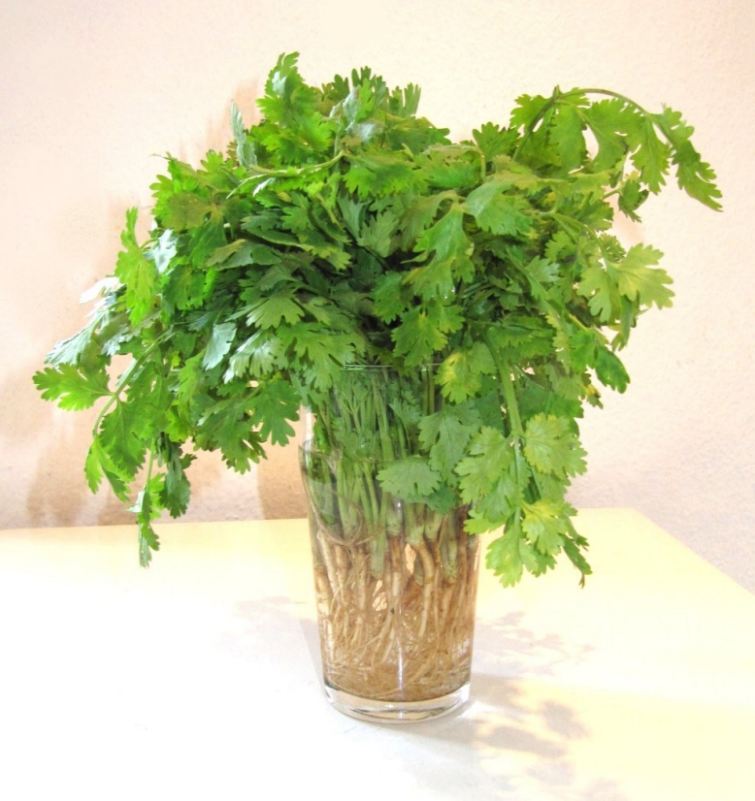
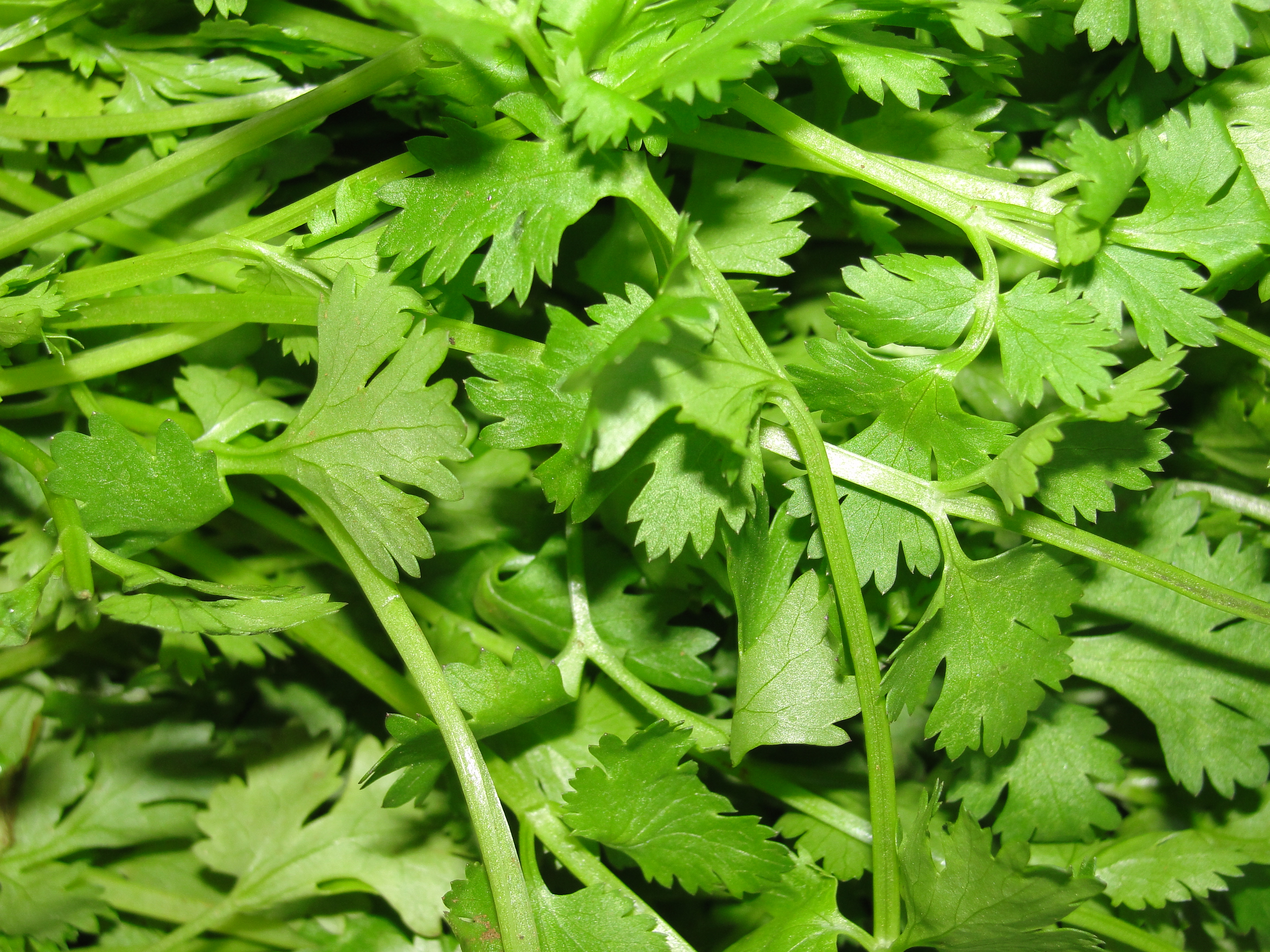
Coriander (Coriandrum sativum), also known as cilantroChinese parsley or dhania, is an annual herb in the family Apiaceae. Coriander is native to regions spanning from southern Europe and North Africa to southwestern Asia. It is a soft, hairless plant growing to 50 cm (20 in) tall. The leaves are variable in shape, broadly lobed at the base of the plant, and slender and feathery higher on the flowering stems. The flowers are borne in small umbels, white or very pale pink, asymmetrical, with the petals pointing away from the centre of the umbel longer (5–6 mm) than those pointing towards it (only 1–3 mm long). The fruit is a globular, dry schizocarp 3–5 mm (0.12–0.20 in) in diameter.
History: Coriander grows wild over a wide area of the Near East and southern Europe, prompting the comment, "It is hard to define exactly where this plant is wild and where it only recently established itself."Fifteen desiccated mericarps were found in the Pre-Pottery Neolithic Blevel of the Nahal Hemel Cave in Israel, which may be the oldest archaeological find of coriander. About half a litre of coriander mericarps were recovered from the tomb ofTutankhamen, and because this plant does not grow wild in Egypt, Zohary and Hopf interpret this find as proof that coriander was cultivated by the ancient Egyptians. The Bible mentions coriander in Exodus 16:31: "And the house of Israel began to call its name manna: and it was round like coriander seed, and its taste was like that of flat cakes made with honey."
Coriander seems to have been cultivated in Greece since at least the second millennium BC. One of the Linear B tablets recovered from Pylos refers to the species as being cultivated for the manufacture of perfumes, and it appears that it was used in two forms: as a spice for its seeds and as a herb for the flavour of its leaves.This appears to be confirmed by archaeological evidence from the same period: the large quantities of the species retrieved from an Early Bronze Age layer at Sitagroi in Macedonia could point to cultivation of the species at that time.
Coriander was brought to the British colonies in North America in 1670, and was one of the first spices cultivated by early settlers

Parts Used---Fruit and fresh leaves.
Habitat---Coriander, an umbelliferous plant indigenous to southern Europe, is found occasionally in Britain in fields and waste places, and by the sides of rivers. It is frequently found in a semi-wild state in the east of England, having escaped from cultivation.

Description---It is an annual, with erect stems, 1 to 3 feet high, slender and branched. The lowest leaves are stalked and pinnate, the leaflets roundish or oval, slightly lobed. The segments of the uppermost leaves are linear and more divided. The flowers are in shortly-stalked umbels, five to ten rays, pale mauve, almost white, delicately pretty. The seed clusters are very symmetrical and the seeds fall as soon as ripe. The plant is bright green, shining, glabrous and intensely foetid.
Cultivation: Sow in mild, dry weather in April, in shallow drills, about 1/2 inch deep and 8 or 9 inches apart, and cover it evenly with the soil. The seeds are slow in germinating. The seeds may also be sown in March, in heat, for planting out in May.As the seeds ripen, about August, the disagreeable odour gives place to a pleasant aroma, and the plant is then cut down with sickles and when dry the fruit is threshed out. Constituents-Coriander fruit contains about 1 per cent of volatile oil, which is the active ingredient. It is pale yellow or colourless, and has the odour of Coriander and a mild aromatic taste. The fruit yields about 5 per cent of ash and contains also malic acid, tannin and some fatty matter.
Coriander fruit of the British Pharmacopoeia is directed to be obtained from plants cultivated in Britain, the fruit before being submitted to distillation being brushed or bruised.
The English-grown are said to have the finest flavour, though the Russian and German are the richest in oil. The Mogadore are the largest and brightest, but contain less oil, and the Bombay fruit, which are also large, are distinguished by their oval shape and yield the least oil of any.

Medicinal Action and Uses---Stimulant, aromatic and carminative. The powdered fruit, fluid extract and oil are chiefly used medicinally as flavouring to disguise the taste of active purgatives and correct their griping tendencies. It is an ingredient of the following compound preparations of the Pharmacopceia: confection, syrup and tincture of senna, and tincture and syrup of Rhubarb, and enters also into compounds with angelica gentian, jalap, quassia and lavender. As a corrigent to senna, it is considered superior to other aromatics.
If used too freely the seeds become narcotic.
Coriander water was formerly much esteemed as a carminative for windy colic.

References:

  1. http://botanical.com/botanical/mgmh/c/corian99.html
  2.  Oxford Advanced Learner's Dictionary.
  3. Daniel Zohary and Maria Hopf, Domestication of plants in the Old World, third edition (Oxford: Oxford University Press, 2000), pp. 205–206
  4. Fragiska, M. (2005). "Wild and Cultivated Vegetables, Herbs and Spices in Greek Antiquity". Environmental Archaeology 10 (1): 73–82.
  5. Chadwick, John (1976). The Mycenaean World. Cambridge University Press. p. 119.

Growing GingerGinger is an important spice crop of the world .Its scientific name is Zingiber officinale.Its a valuable cash crop and plays an important role in aurvedic medicines in India .It has been used for cleaning body through perspiration,to calm down nausea,and to stimulate the appetite.Ginger tea is used as carminative and in the symptomatic treatment of colds.Ginger contains gingerol, an oleo resin that accounts for the characteristic aroma and therapeutic properties.Components of gingerol posses beneficial properties for the treatment of poor digestion,heart burn,vomiting and preventing motion sickness.
 
Climate and soil

Ginger requires tropical,subtropical and humid climate for its commercial production.It can be successfully grown to an altitude of 1500mt.A well distributed rainfall during growing season and dry season during the land preparation as well as before harvesting is required for good growth and
yield of the crop. Dry weather with a temperature range of 28-30 degree Centigrade for about a month before harvesting is ideal . High humidity throughout the crop period is necessary. Ginger prefers good garden soil, rich in humus, light, loose, friable, well drained and of at least 30 cm depth. Rhizome growth is better on slightly acidic soil.

Varieties

Most promising varieties of ginger are Himgiri,Varad,surbhi,suruchi,Ernas,Nadia,Maran,Rio de jenerio and China.
Planting
In northern India, planting of Ginger is done on the onset of monsoon. In Eastern India planting is done in the month of march.The method of land preparation depends on the soil and climatic conditions.Usually beds of 1.0 mt width ,15 cm height, and 6-7 metre in length with 30 cm wide channels between beds are made. Ginger is universally propagated from cutting of Rhizome known as bits. A direct relationship has been established between size of planting material and final yield. Bits should be 3-5cm in the length, 15- 20gm in weight and at least one sound bud .A seed rate of 15-20 Quintal per hectare is considered to be optimum for planting. Before planting bits should be treated with fungicide like carbendazim and mancozeb by dissolving the 30 gm of powder in 15 litres of water as a safeguard against soft rot and to induce early sprouting.The spacing for planting of the ginger should be kept 25-45 cm between rows and 15-20 cm between plants.

Manures and Fertilizers

Well rotten FYM or compost at the rate of 25-30 ton/hectare should be applied at the time of planting. The amount of inorganic fertilizer depend upon the fertility of the soil and organic manure used. It ranges between 100-120 kg nitrogen, 75-80 kg of phosphorus and 100 -120 kg of Murat of potash.It is advisable to add 20-25 kg of elemental sulphur at the time of land preparation to correct the deficiency of sulphur which is increasing in Indian soils. Half of nitrogen and entire quantity of phosphorus and Murat of potash should be given as basal.Rest of the nitrogen should be split in two doses as top dressing at the 45 and 90 days after planting.

Shade and mulching
One row of maize in every inter row space of ginger with maintenance of 100% maize population and application of additional fertilizer to maize additional yield of ginger can beobtained. Mulching is essential as it enhances sprouting ,increase infiltration and organic matter .

First mulching should be done at the time of planting with quick rotting green leaves at the rate of 10-12 t/hectare or with dry leaves at the rate 5-6 t/hectare.
Water management
The crop raised in the month of April-May needs 2-4 initial watering at an interval of 7 days depending upon the soil types. After this the crop receives monsoon rain and comes up well till end of September . Subsequently the crop has to be given watering commencing from middle of October and the end of December at 15 days intervals. In ginger cultivation sprouting, rhizome initiation and rhizome development are critical stages of irrigation.
Weed management
Two weeding are generally given to the ginger crop.First weeding should be done just before the second mulching. It is repeated depending on the intensity of the weed growth or at an interval of 45-60 days. During hoeing , every care should be taken so that the rhizomes should not be disturbed, injured or exposed.

Plant Protection

To control shoot borer and leaf roller the spray of indoxacarb @ of 10 ml per 15 litre of water or novaluron@ of 10 ml per 15 litre of water is very effective if sprayed at 15 days interval. Rhizome scale insects destroys rhizome and it can be controlled by dipping the seed rhizome in quinalphos by dissolving 1 ml in 1 litre of water .To avoid rhizome rot , good drainage and treatment of the seed rhizome with dissolving 3 gm of combination of carbendazim and mancozeb ( readily available in the market) in 1 litre of water for nearly 30 minutes, before storage should be done. Bacterial wilt which causes milky ooze as gentle pressing of rhizomes and can be effectively controlled by treating the seed rhizome with dissolving 2 gm of streptocycln in 1 litre of water for 30 minutes.

Harvesting and yield


For fresh Ginger, the crop should be harvested before attaining the full maturity means when rhizomes are still tender, low in pungency and fiber content, usually from fifth month onwards after planting. Harvesting for the preserved ginger should be done after 5-7 months of planting while harvest for dried spices and oil is best at full maturity. i.e between 8-9 months after planting when leaves start yellowing. Rhizomes to be used for planting material should be harvested until the leaves become completely dry. After digging the rhizomes should be treated with fungicide like mancozeb @3-4 gm per litre of water , dried in shade , and stored in pits covered with 20 cm layer of sand alternating every 30 cm layer of rhizomes. These pits should be dug under a thatched roof to protect the rhizomes from rain, water and direct sun. Average yield varies from 12-15 tons per hectare. However recovery of dry ginger varies from 20-22%.

Washing and drying

After harvest, the fibrous roots attached to the rhizome should be trimmed off and soil is removed by washing. Rhizomes should be soaked in water overnight and then cleaned. The skin can be removed by scrapping with the correct instrument. Peeling or scraping reduces, drying time, thus minimizes mold growth and fermentation. However scraping process tends to remove some of the oils constituents which are more concentrated in the peel. By removing the outside Corky skin the fiber content also decreases. After scrapping, the rhizomes should be sun dried for a week with frequent turning and well rubbed by hand to remove the outer skin. This is called as the unbleached ginger . The peeled rhizomes should be repeatedly immersed in 2% lime solution for 6 hours and allowed to dry in the sun for 10 days while rhizome receive a uniform coating of lime and moisture content should be 8-10%. This is called as bleached ginger which has improved appearance with light bright colour.
farming.com.pk. Powered by Blogger.